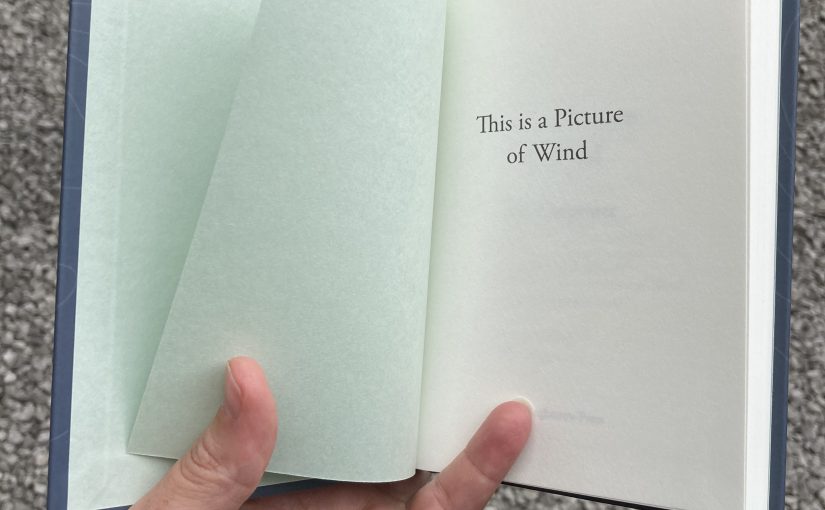
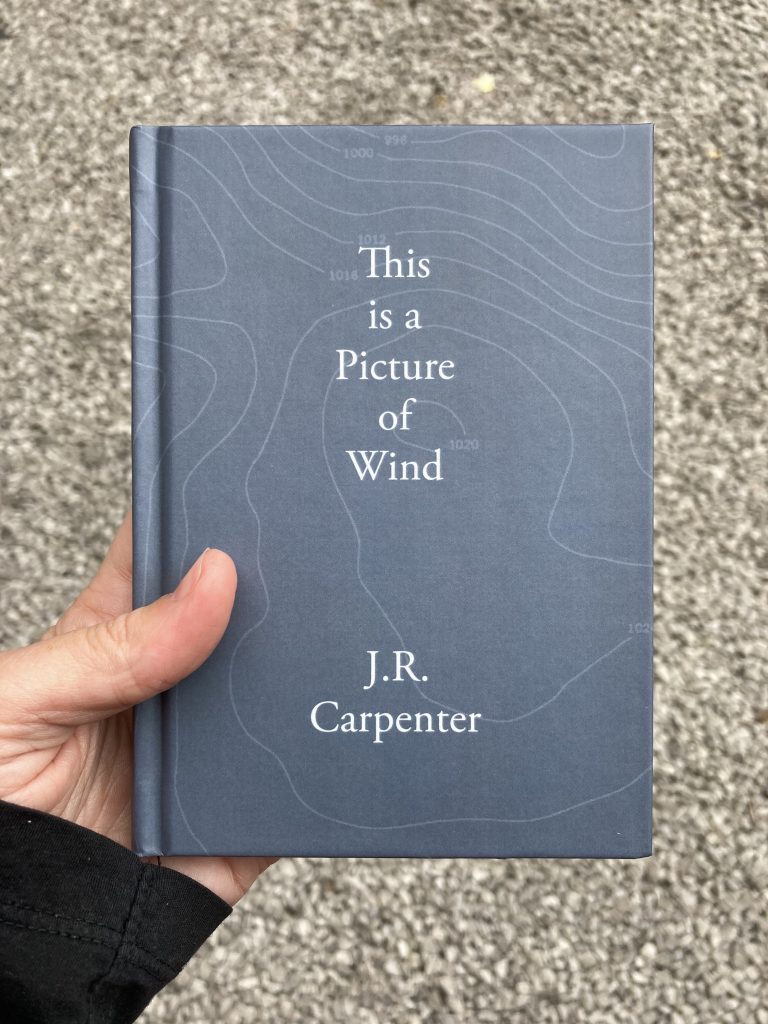
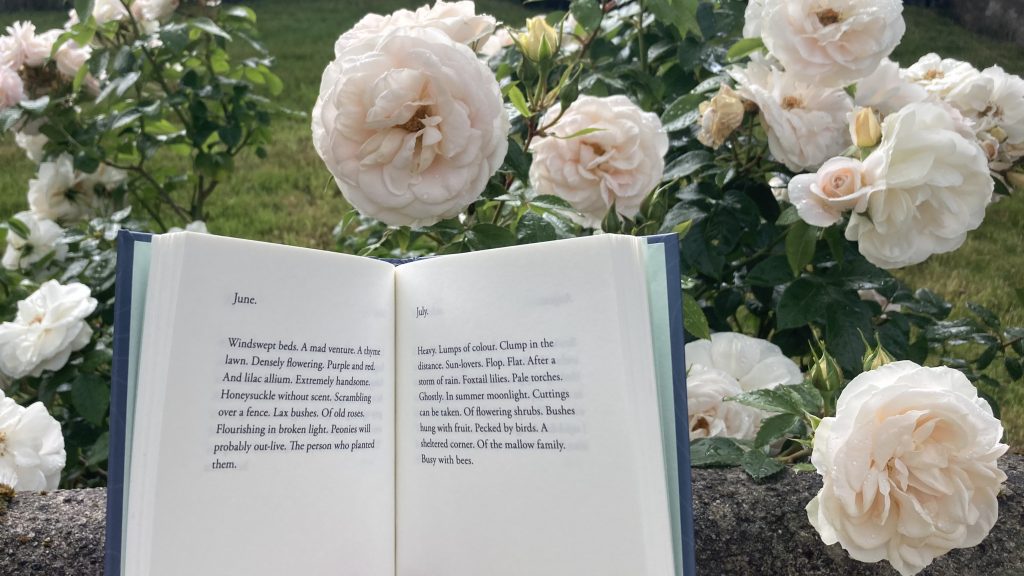
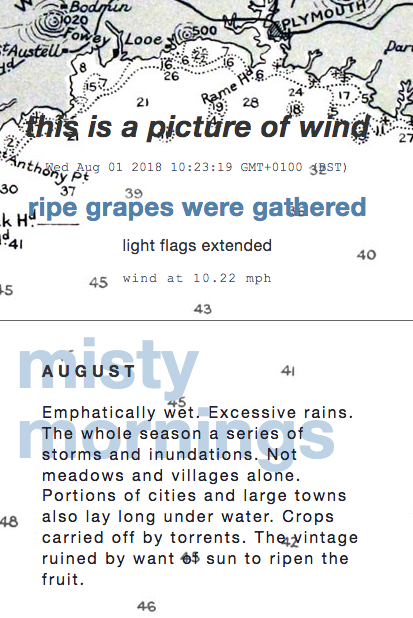
On 30 June 2020 Sheffield-based Longbarrow Press published my new poetry collection, This is a Picture of Wind. On Saturday 28 November 2020, it was named one of the best books of poetry of 2020 by The Guardian. A month later, I’m only just getting around to blogging about it. It’s been a heck of a year.
J. R. Carpenter, This is a Picture of Wind. Sheffield: Longbarrow Press, 2020
In The Guardian, Rishi Dastidar describes This is a Picture of Wind as “title that gives shape to the ineffable […] a digitally tinged pillow book full of staccato language inspired by John Ruskin’s “sky-bottling days”, Francis Beaufort’s wind scale and Luke Howard’s observations of clouds.” And in SPAM Press’s Deep Cuts 2020 Kirsty Dunlop writes: “this collection felt like a necessary breath in the stagnant air of this year.”
This pocket-sized hardback collection is based on This is a Picture of Wind: A Weather Phone for Phones, a web-app optimised for smart phones, commissioned by Iota Institute in 2018. The book features an introduction by Johanna Drucker, and a poetic afterword by Vahni Capildeo and contains new material from me, some of which will be added to the web-app over the course of 2021.
There’s also a Twitterbot companion to the project, posting randomly-generated, poetic, yet plausible weather observations every six hours @apictureofwind.
J. R. CArpenter, This is a Picture of Wind. Sheffield: Longbarrow Press, 2020
The best way to purchase This is a Picture of Wind is direct from the publisher, Longbarrow Press. On the Longbarrow website you can also view a series of short videos featuring excerpts of the work.
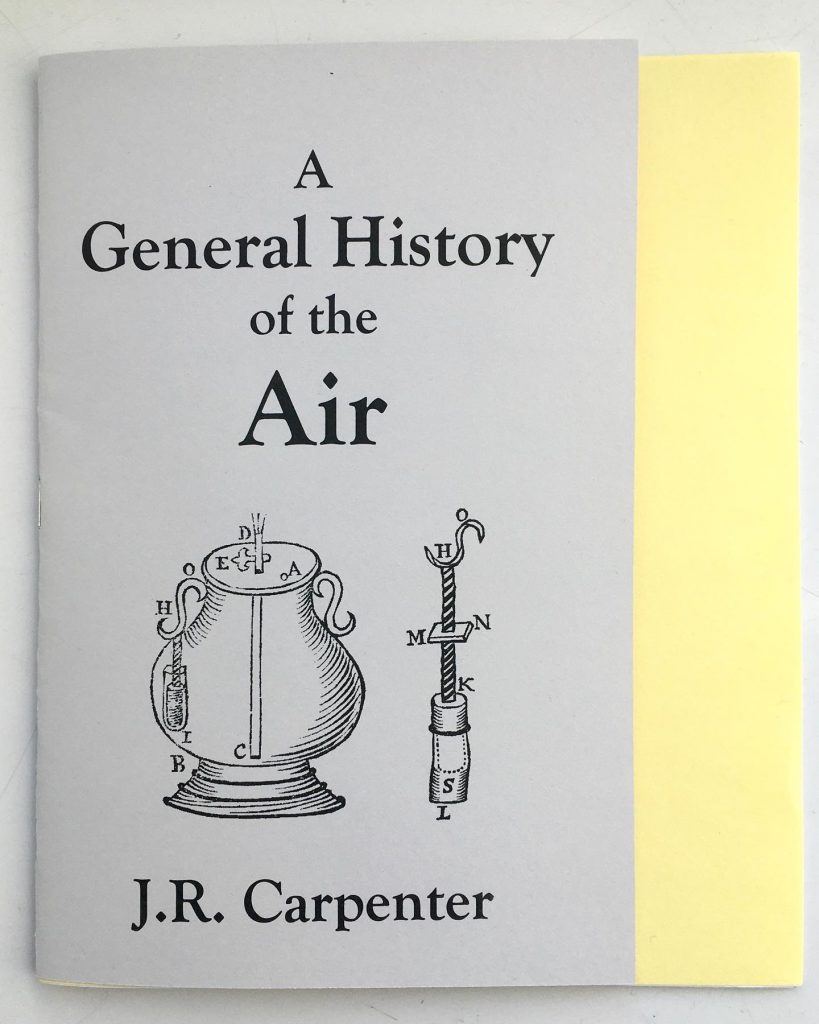
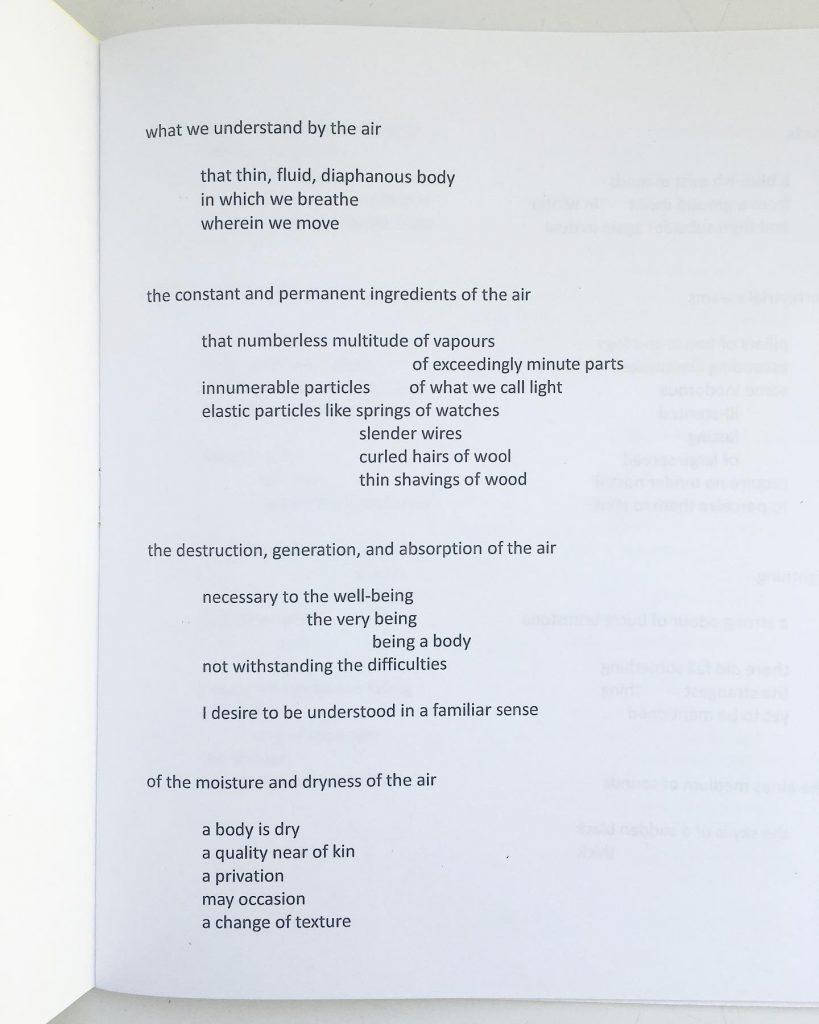
In the blur that was March 2020 the Ottawa-based above/ground press published some new work from me in a single-poem pamphlet called A General History of the Air. The launch was meant to coincide with my appearance at the 10th annual VERSeFest in Ottawa, March 24-29, 2020. Though the festival has been postponed due to Covid 19, the chapbook is available for order online (details below).
J. R. Carpenter, A General History of the Air. Ottawa: above/ground press, March 2020The first page of A General History of the Air, J. R. Carpenter, 2020
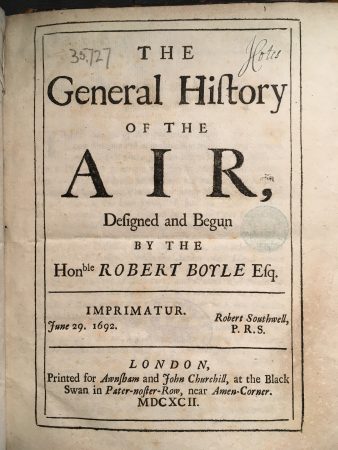
The cover image and all of the text comes from a book called The General History of the Air, Designed and Begun by the Honourable Robert Boyle Esq., Printed for Awnsham and John Churchill, at the Black Swan in Pater-noster-Row, near Amen-Corner, June 29, 1692. I consulted a first edition held at the British Library in London, UK, Shelfmark 1651/1033.
The General History of the Air, Robert Boyle, 1692.
After some months at sea, my author copies have now arrived in the UK and are available for order via PayPal paypal.me/jrcarp. £8 for shipping within the UK, £10 for elsewhere in Europe. These prices include postage, packaging, and PayPal fees. North Americans would do better to order directly from the publisher.
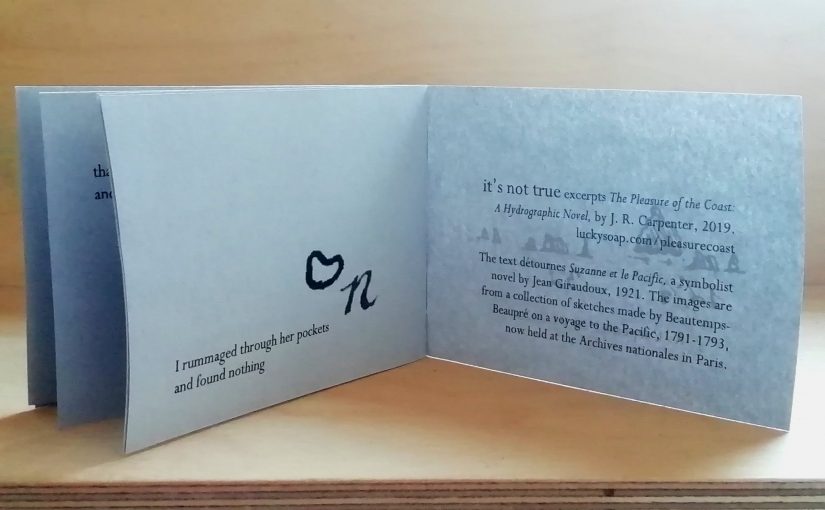
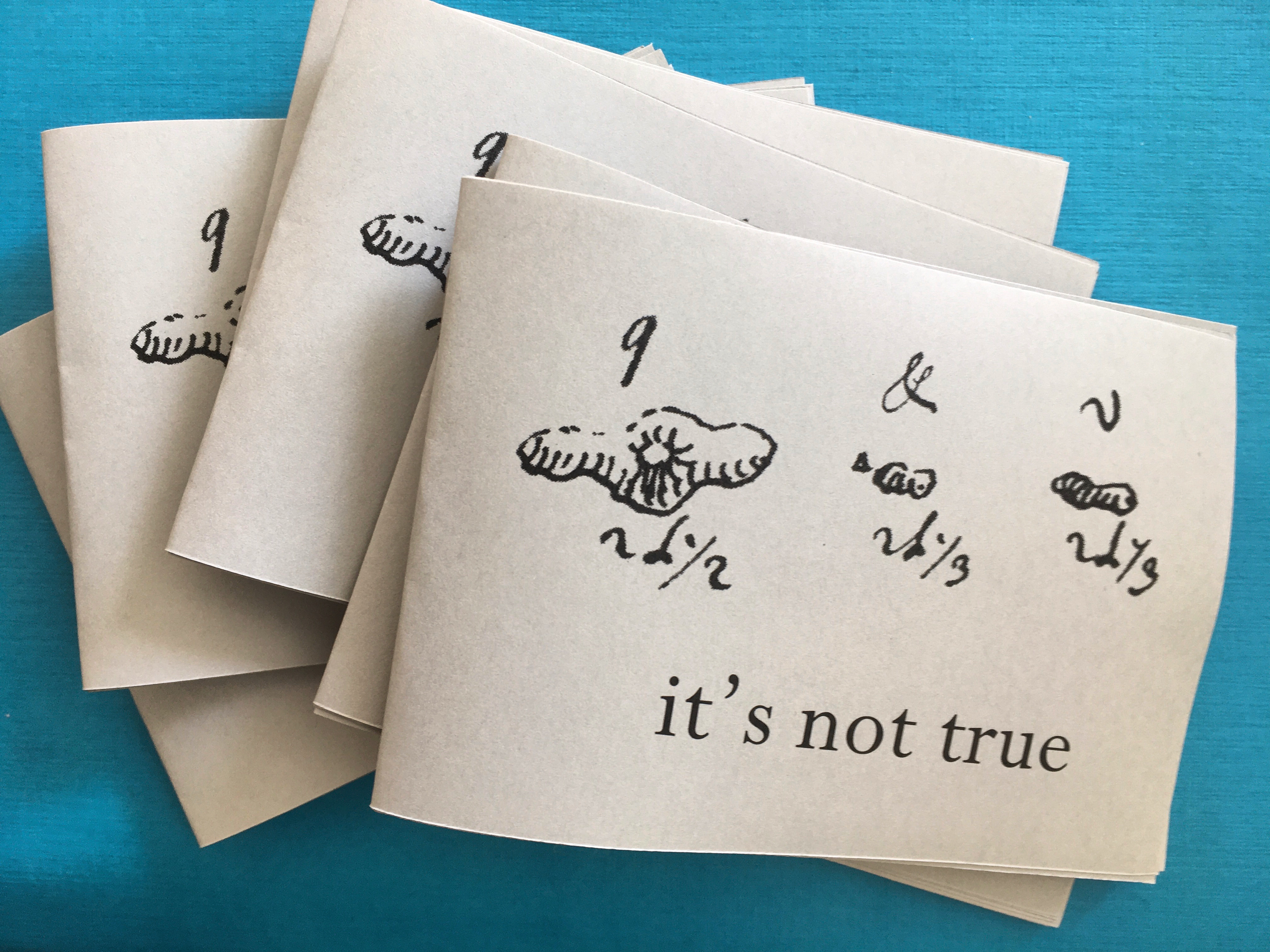
I made a castaway-themed zine this week, to send to friends who are self-isolating. Because zines are my first response to a crisis. When I reached the limit of how much I could spend on postage I put a call out on Twitter: Anyone with a secure income who PayPals me a tenner gets a zine, plus I’ll send out 4 more free to anyone in isolation anywhere in the UK. Okay, I said 5. But I meant 5 in total. A tenner will over the cost of 5 zines.
it’s not true || J. R. Carpenter
The response so far has been overwhelming. This call still stands. While supplies last. If anyone would like to pay more than they need to for a small zine so that I can keep sending out copies for free to other people in isolation, send £10 via PayPal. In the email, please be sure to include your postal mailing address.
If you’d like me to send zines to other people in isolation in the UK, especially artists, writers, and other freelancers who’ve lost much of their income, go ahead and include up to four addresses.
About the zine: it’s small, hand-cut, from a single-sheet of grey A4. It’s about a castaway, so, lightly dark, but these are dark times.
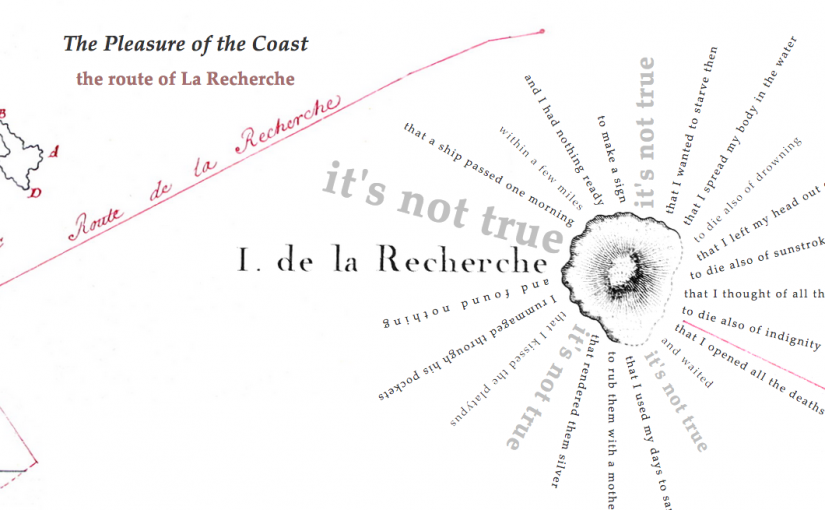
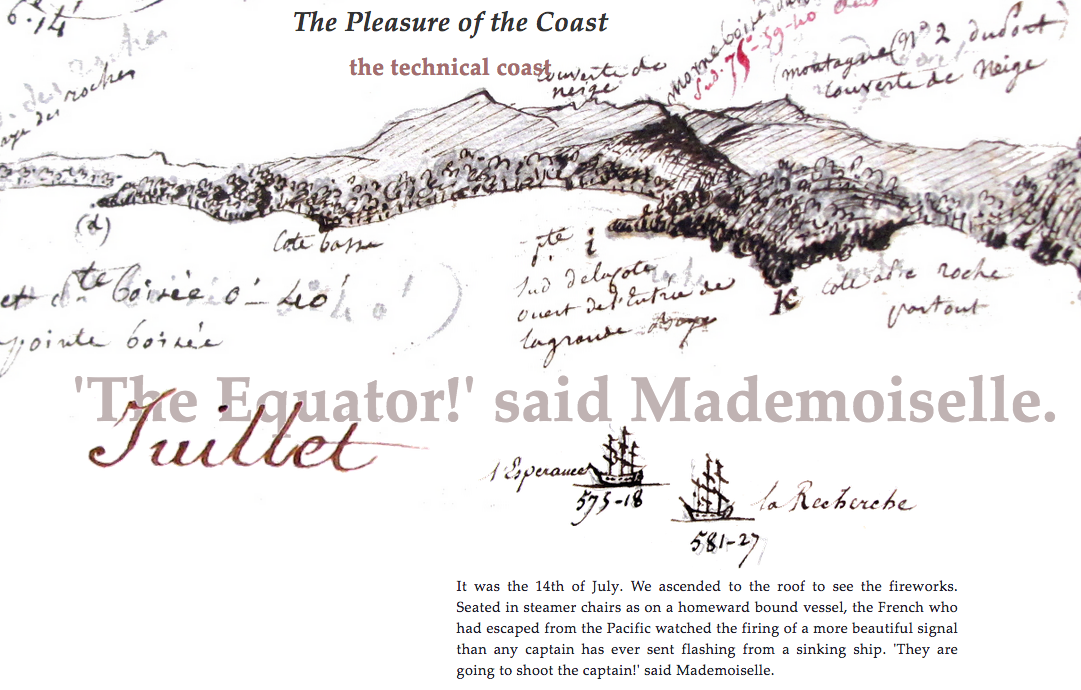
I’m delighted to announce the launch of a new bilingual web-based work of digital literature today, Bastille Day. In English the work is called The Pleasure of The Coast: A Hydro-graphic Novel. In French, Le plaisir de la côte : une bande dessinée. It’s a story of the western mapping of the South Pacific, rather too big for most phones. Best viewed on a laptop or tablet. It’s available here: http://luckysoap.com/pleasurecoast
The Pleasure of the Coast || J. R. Carpenter, 2019
An ocean of thanks to Arnaud Regnauld and Pierre Cassou-Nogues at Université Paris 8; to Françoise Lemaire, Nadine Gastaldi, and Clothilde Roullier at the Archives nationales; and to Robert Sheldon and Stelios Sardelas for ground support in Paris.
For anyone unfamiliar with French naval history, some background information may be useful. In 1785 King Louis XVI appointed Lapérouse to lead an expedition around the world. The aim of this voyage was to complete the discoveries made by Cook on his three earlier voyages to the Pacific.
On the 1st of August 1785, Lapérouse departed Brest with no less than ten scientists aboard. On the 10th of March 1788, Lapérouse departed the English Colony at new South Wales, Australia. He was never seen by European eyes again.
To the English ear, the name Lapérouse sounds a lot like the verb ‘to peruse’ — to scan or browse, to read through with thoroughness, to survey or examine in detail. The dictionary cautions, the word ‘peruse’ can be confused with the verb ‘to pursue’ — to follow in order to overtake, to strive to gain, to seek to attain, to proceed in accordance with a method, to carry on or continue. The English word ‘pursue’ sound a bit like the French word ‘perdu’ — disposable, ruined, lost.
On 25 September 1791, Entrecasteaux departed from Brest in search of the lost Lapérouse. One of his two 500-ton frigates was named La Recherche. On board was a young hydrographer, Charles-François Beautemps-Beaupré (1766-1854), a close contemporary of the English hydrographer Francis Beaufort (1774-1857). Beaufort is perhaps most famous for the wind scale named after him, for measuring the force of the wind. Beautemps is an auspicious name for an ocean-going person, in need of fair winds. Once at sea, however, beau pré are few and far between.
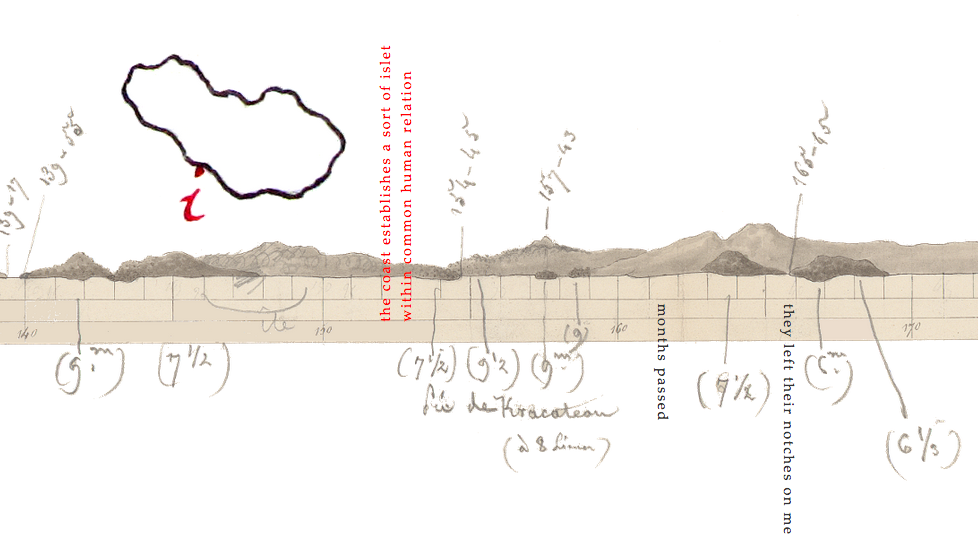
Finished sea charts are designed to be uniform in appearance, as precise as possible. The Archives nationales in Paris holds hundreds of sheets of drafts of charts made by Beautemps-Beaupré aboard La Recherche, and boxes of sketchbooks. A mix of drawing, writing, and numbers. The active marks of a practicing hand. Oak gall ink on rough paper. Liquid lines of inquiry. Drawn onwards by a moving ship.
The title and much of the text in this work borrows from Roland Barthes, The Pleasure of the Text (1973). The word ‘text’ has been replaced with the word ‘coast’. This détourned philosophy is intermingled with excerpts from Beautemps-Beaupré’s Introduction to the Practice of Nautical Surveying and the Construction of Sea-Charts (1808). Artistry, philosophy, hydrography — what’s missing. Ah, yes, fiction. And women. This gap is filled by Suzanne, the first-person narrator of Suzanne et le Pacific. In this early novel by Jean Giraudoux, published in 1921, a young French woman wins a trip around the world. She becomes shipwrecked, and survives alone on a Pacific island in roughly the same region surveyed by Beautemps-Beaupré.
I have appropriated, exaggerated, détourned, corrected, and corrupted both the original French and the English translations of these texts. Who, then, is the author of this work? The author is not dead. The author is multiple: multimedia, multilingual, poly-vocal. “Which body?” Barthes asks, “We have several.” Imagine if Barthes were the bastard love child of Giraudoux but grew up to be a hydrographer instead of a philosopher. Or if Beautemps-Beaupré had secretly written a symbolist novel from the point of view of a female castaway. But for the web…
The Pleasure of the Coast || J. R. Carpenter, 2019
In French, the term ‘bande dessinée’ refers to the drawn strip. What better term to describe the hydrographic practice of drawing views of the coast from the ship? In English, the term for ‘bande dessinée’ is ‘graphic novel’. I’m calling this work a hydro-graphic novel.
The images in this work are a combination of my own photographs and digitisations generously made for me by the Archives nationales. More information on the text sources can be found within the work itself. Finally, I would note that this work is imperfectly bilingual. All errors in translation, transcription, and interpretation are my own.
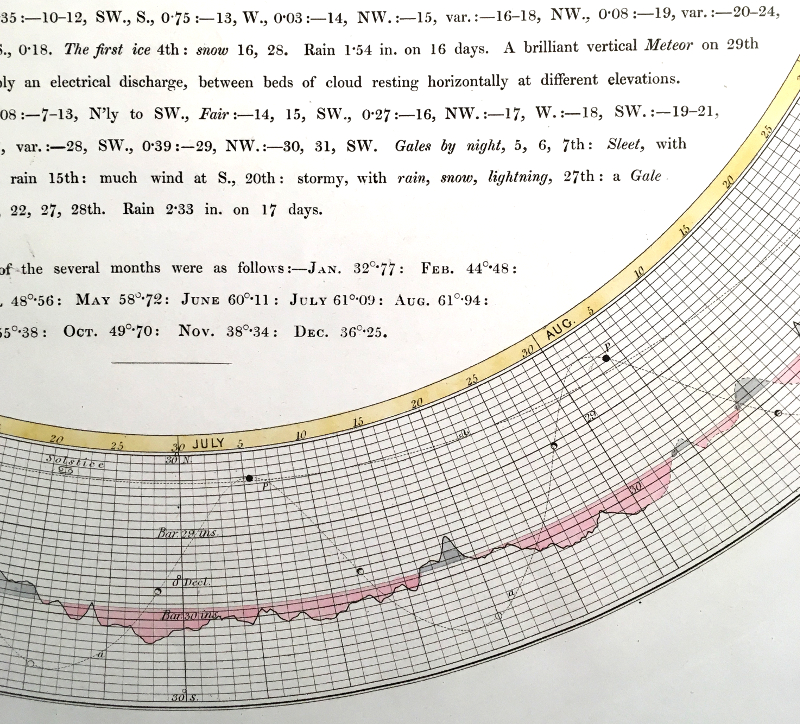
For the whole of 2018 I posted a new poem at the start of every month to my web-based work, This is a Picture of Wind, a weather poem for phones. These monthly poems were based on weather observations made two centuries ago by Luke Howard. A Quaker, chemist, and amateur meteorologist, Howard is perhaps best known as the author of the essay On the Modifications of Clouds, in which, he gave the clouds the Latin names we still use today. Hendecasyllabic fragments of that essay made their way into my my web-based work The Gathering Cloud. For This is a Picture of Wind, I consulted a later volume by Howard: Barometrographia: twenty years’ variation of the barometer in the climate of Britain, exhibited in autographic curves, with the attendant winds and weather, and copious notes. This large, beautifully printed folio was published in London in 1847. It can be found in the British Library at Shelfmark Tab.817.a.
Detail from Luke Howard, Barometrographia, 1847
Some readers may have noticed as the year progressed, that lurking below these new posts was a second row containing a full year of poems. Those poems were written first. The form the core impetus for the piece. They were written in response to the conveyor-belt of storms which battered southwestern England in 2014, resulting in catastrophic flooding in Somerset and the destruction of the seawall at Dawlish, near where I live in Devon. For 2019 I’ve moved that year of poems up to the top row for greater visibility.
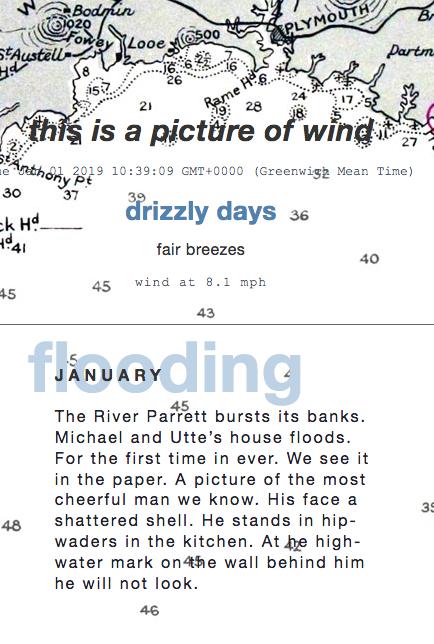
This is a Picture of Wind || J. R. Carpenter
Initial research for This is a Picture of Wind was made possible with the support of the Dot Award for Digital Literature. The finished work was one of three web-based works by Canadian women commissioned for #IOTADATA by IOTA Institute in 2017 with the support of a grant from the Canada Council for the Arts. In December 2018 IOTA released a free e-publication about the #IOTADATA project containing an introduction by David Clark, a three-way interview between the artists, and an essay about each artist’s work. I am deeply indebted to IOTA curator Mireille Bourgeois for commissioning this work in the first place and all the more so for convincing Johanna Drucker to write about it.
By choosing a calendar grid to organize the presentation of observations in This is a Picture of Wind, Carpenter puts the dialogue between the phenomenal world and its connection to human frameworks of perception into immediate, graphical view […] the wind cannot be caught in calendar frameworks any more than the waters of the sea are held in a net. The wind rushes through the rational structure, even as it leaves behind, in this case, a residue of poetic notes, observations formulated in relation to fleeting sensations of the volatile atmosphere.
~ Johanna Drucker, DYNAMIC POETICS: JR CARPENTER’S THIS IS A PICTURE OF WIND
Drucker’s full essay is available for free download. It begins on page 20 of this PDF.
Twitter users can follow a remix of the work as it unfolds year-round. Fragments of text from the project are blown about but a Twitter bot posting variable poetics of wind into new configurations every six hours through this account: @apictureofwind
I’m heading Montreal next week for the first time in 2.5 years. I’m doing two public events: a performance lecture at the HTMlles Festival hosted by feminist artist-run centre Studio XX, and a book launch at L’Euguélionne, a feminist bookstore. I look forward to seeing friends old and new. For more details about both events, read on…
On Thursday 1 November 4-5:30 at OBORO (4001 Berri, 2nd floor), twenty-one years after participating in the first HTMlles Festival, I am delighted to return for this 13th edition. Beyond the # — Failures and Becomings looks at the role of digital technologies in this new space of expression, the reclaiming of voice, as well as obstacles and ways to successfully move forward.
I will present a performance/lecture called Things Rarely Turn Out the Way I Intend Them To. Social media has exponentially expanded the audience for web-based art and writing, but the hashtag operates largely within proprietary zones of the internet governed by neoliberal corporations. What does it mean to write into spaces we don’t own? When does success constitute a failure? Will the new ever get old? Things Rarely Turn Out the Way I Intend Them To reflects with humour on failures and becomings engendered by women web artists and writers over the past quarter of a century or so. It prompts us to think about how far we’ve come, to figure out how far we have yet to go.
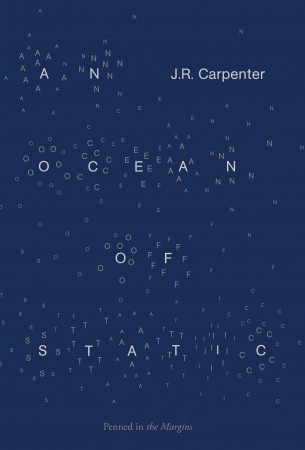
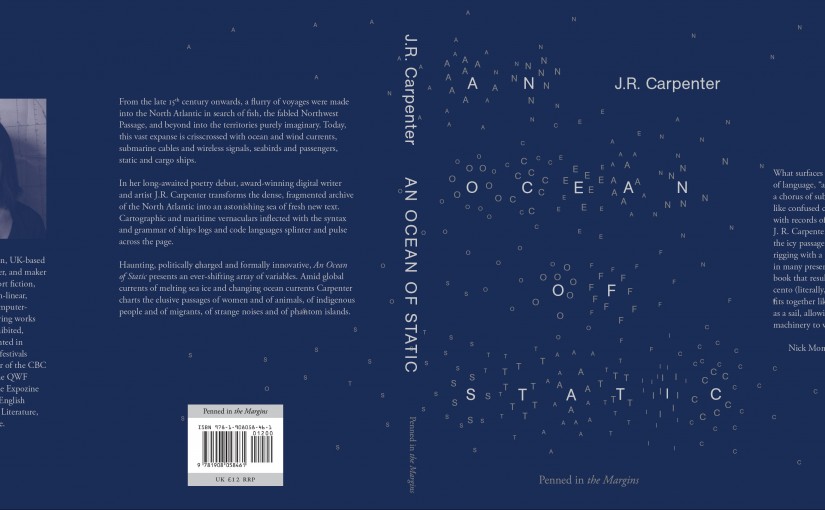
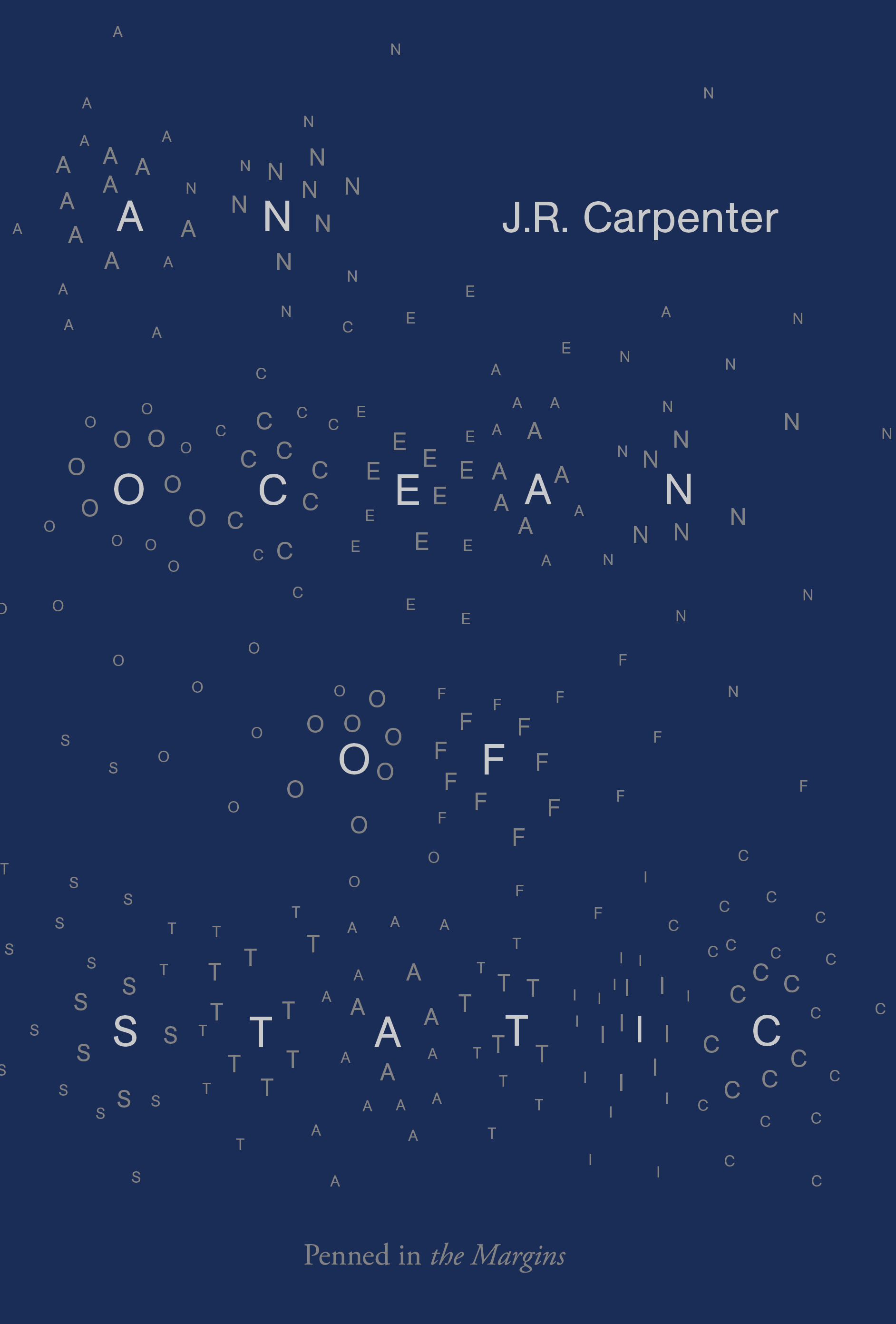
The festival launch event will take place immediately after my event at Studio XX, just across the hall. Full Festival Calendar. An Ocean of Static || J. R. Carpenter, Penned in the Margins, 2018 Friday 9 November at 18:30 will mark the North American launch of my debut poetry collection An Ocean of Static (Penned in the Margins 2018). This event will take place at L’Euguélionne, a feminist bookstore at 1426 Beaudry, Montreal, Quebec H2L 3E5. I will be joined by Montréal poet, Deanna Radford. Books will be available for purchase at the event.
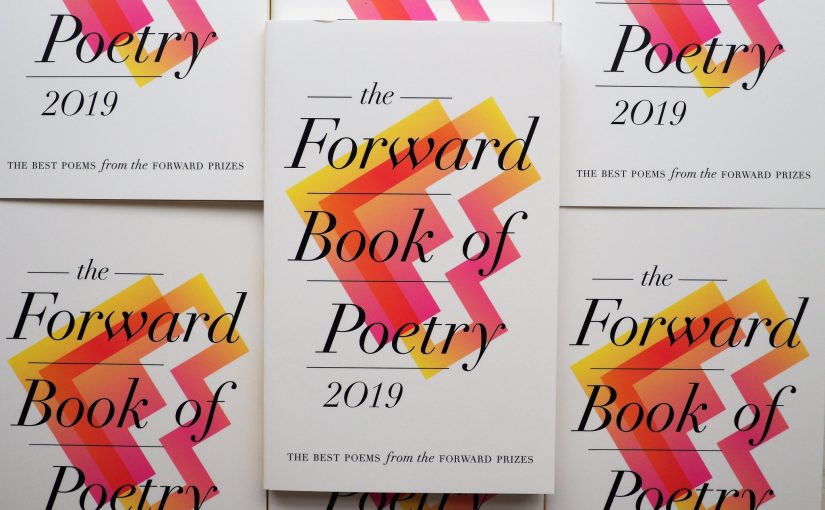
An Ocean of Static was highly commended for the Forward Prize 2018. An excerpt from the book has been published in The Forward Book of Poetry 2019 (Fabre & Fabre). More info on that here. For more information about the book itself, to read reviews, to download a sample, or to order online, visit the publisher’s website.
This autumn I’m writer-in-residence at Greenway, the former holiday home of Agatha Christie, now run by the National Trust. Greenway is situated high on a hill overlooking the River Dart near Dartmouth in Devon. As part of my residency, for National Poetry Day, Thursday 4 October 2018, I Tweeted fragments of writing about the River Dart near Greenway. The thread grew throughout the day to form a poem. Here it is in its entirety:
a ria
a rise
a river runs
green in the shadow
of a steep wooded bank
deep roots tangle in dense strata
the rucked sheets of the Dartmouth beds
the ancient stone of the Lower Devonian
a dark strip between water and leaf
slate slants askance at the falling tide
mist eats green leaves alive
cloud shadows the far shore
counterfeits the coast
the river rolls out its yardage
bolts of shot silk shiver silver
pocked pewter
puckering grey
rain like we haven’t seen for some time
stains the parched fields green
pummelled plums fall
purple eggs from the sky
a ria || a poem for National Poetry Day written as writer-in-residence at Greenway
Upcoming activities:
Join me at Greenway on Saturday 13 October 2-4 PM for an informal discussion on Writing and Weather. Bring along a short piece of writing by you or your favourite author to share with the group. Please also bring proof of booking with you. Booking info.
On 15 November I will be leading a creative writing workshop at Greenway on Writing and Time. The aim of the workshop is to provide writers at all levels with strategies for getting started, getting going, and getting inspired, which can then be used for future writing projects. Open to writers at all levels. Booking info.
This residency is co-sponsored by Literature Works and the National Trust. For more information about upcoming activities happening at Greenway as part of this residency please visit Literature Works.
I’m thrilled to share the news that my debut poetry collection, An Ocean of Static, has been Highly Commended by the Forward Prize 2018. Congratulations to all the other Highly Commended poets for their fine works.
Forward Prize Commendations 2018
Many thanks to my wonderful publishers Penned in the Margins for supporting this book. The book launch was held at the British Library in London in April 2018, thanks to the Eccles Centre for American Studies. An Ocean of Static has been presented at Cuirt International Festival of Literature and Edinburgh International Book Festival. It has received excellent reviews. Ian McMillan from Radio 3’s The Verb called it: “A marvellous firework of a book … a Moby Dick and Ancient Mariner for our times.” An Ocean of Static || J. R. Carpenter, Penned in the Margins, 2018
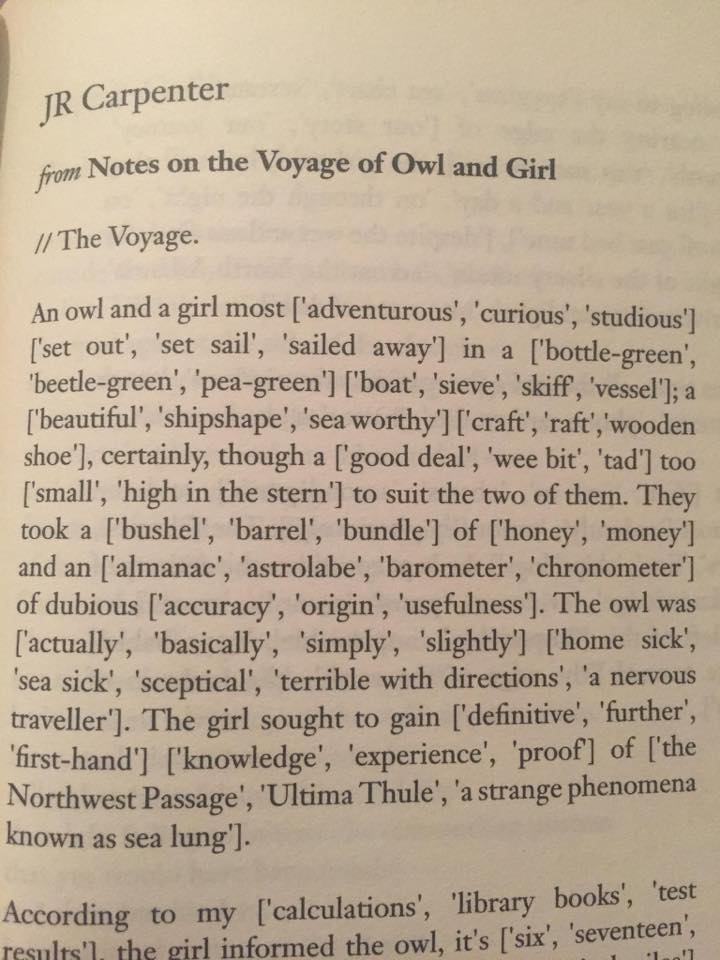
An excerpt of one of the poems in the collection has been published in the Forward Book of Poetry 2019, which is now available for purchase. This poem started off as a digital text called, Notes on the Voyage of Owl and Girl. This work has been performed at Le Cube in Paris, The British Library in London, The Club at The Banff Centre, The March Hare in Newfoundland, and many smaller venues. A print iteration of this poem was first published in Fourteen Hills: The San Francisco State University Review, in May 2014. Many thanks to all those who helped Owl and Girl along on their long voyage. I’m especially thrilled to see traces of JavaScript grace the pages of the Forward Book of Poetry 2019.
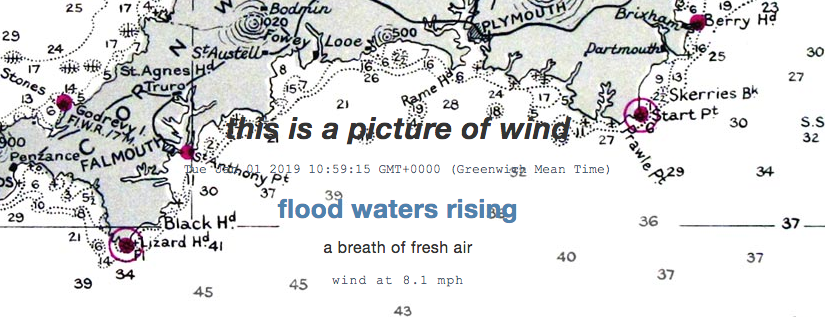
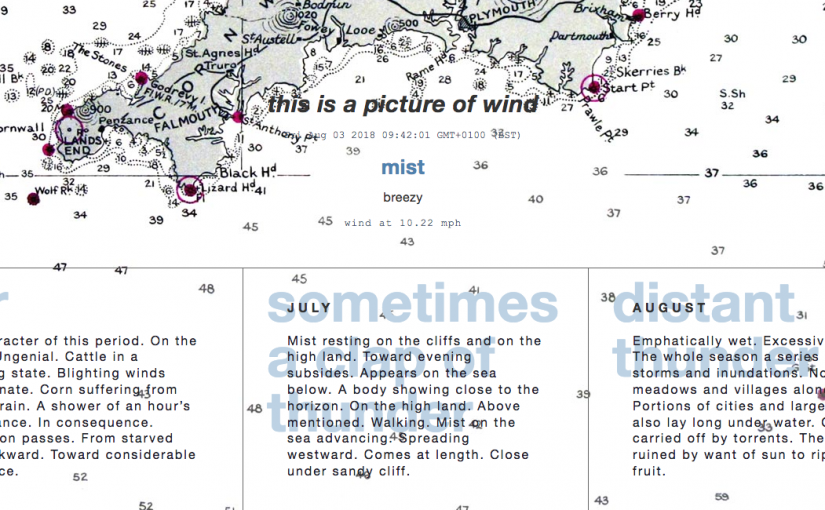
This is a Picture of Wind expands upon a series of short texts written in response to the winter storms which battered South West England in early 2014, resulting in catastrophic flooding in Somerset and the destruction of the seawall and rail line at Dawlish in Devon. Part poetic almanac, part private weather diary, and part live wind report for the South West of England, this work attempts to call attention to climate change by picturing through variations in language the disturbances and sudden absences left in the wake of wind.
The is a Picture of Wind || J. R. Carpenter
This is a Picture of Wind was commissioned by IOTA:DATA. It was created in part with the support of the Dot Award for Digital Literature. The work is designed to be read on phones but it also works on computers. It calls on live wind data, so it will look different every time you view it. A new text will be added for each month of 2018. A text about this work written by Johanna Drucker will be published by the IOTA Institute in the autumn of 2018.
The launch of my debut poetry collection will take place at the British Library in London on Friday 27 April 2018, 19:30. Join us for an evening of digital projection, live performance, and a conversation with Peter Jaeger. The event is hosted by Penned in the Margins and the Eccles Centre for American Studies. It’s FREE but booking is essential. RSVP now to reserve your place.
Published in paperback by the ever-excellent Penned in the Margins, with silver cover foiling and French flaps, An Ocean of Static, will be available for purchase 24 April 2018.
An Ocean of Static || J. R. Carpenter, Penned in the Margins, 2018
From the late 15th century onwards, a flurry of voyages were made into the North Atlantic in search of fish, the fabled Northwest Passage, and beyond into the territories purely imaginary. Today, this vast expanse is crisscrossed with ocean and wind currents, submarine cables and wireless signals, seabirds and passengers, static and cargo ships.
This book transforms the dense, fragmented archive of the North Atlantic into a sea of fresh new text.
What surfaces in An Ocean of Static are arrays of language, “arguments” that can be read as a chorus of subtle alternatives or sometimes like confused cries in a nautical crisis, along with records of journeys from centuries apart. J. R. Carpenter draws language through the icy passage of code’s style, gripping the rigging with a performative voice developed in many presentations of this work. The book that results is in the ancient form of the cento (literally, a patchwork), but one that fits together like whole cloth, functioning as a sail, allowing air, human effort, and machinery to work together to carry us along.
–Nick Montfort, author of The Truelist
This book is made of other books. The poems in this book are composed of facts, fictions, fragments, and codes collected from accounts of voyages undertaken over the past 2,340 years or so, into the North Atlantic, in search of the Northwest Passage, and beyond, into territories purely imaginary. The poems in this book are intended to be read on the page and to serve as scripts for the live performance of a body of web-based works.
Portions of this work first appeared, often in very different forms, in a wide range of print, digital, and live performance contexts. A full list of links and references is available here.